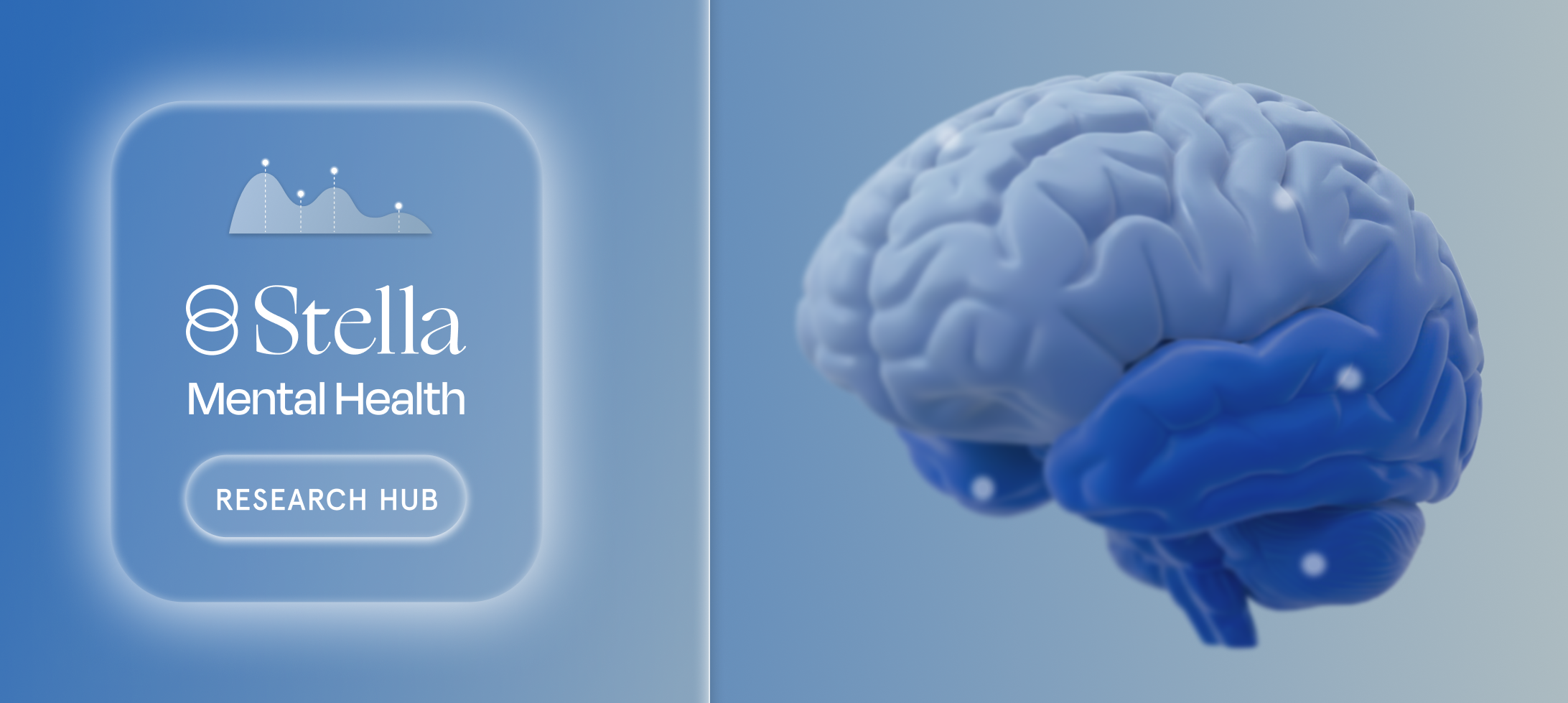
Stella Research Hub Interactive Web Tool
Role: Designer, Art Director, Project Manager
Scope: Concept, UX, UI, and production of an interactive patient-facing research tool
Deliverables: UX & UI design, final build-ready screens
Client: Stella Mental Health
The Challenge
One of the biggest design hurdles at Stella is getting patients to trust that what we’re doing is working and is backed by research and real results. Stella's treatments are clinically validated and results are collected on a patient level, but that evidence in a company would normally be private, living in dense files, that patients would never read.
The goal was to make that research accessible, relevant, and personal, giving patients a way to explore the real results behind the treatments Stella provides in a format and with results designed and tailored for them.
My Approach
I designed the Research Hub from scratch, starting with the core question of what would actually make a patient engage with data and numbers that can feel overwhelming and confusing. The answer was personalization. Rather than presenting a generic list of numbers, the tool surfaces results relevant to the patient's specific condition and treatment, making the research feel directly connected to their own experience.
I owned the project end to end: helping map the user flow, designing the interface, working with developers and project managing the build through to launch. The visual design followed Stella's brand system while introducing interaction patterns suited to an exploratory, self-guided experience. Clear navigation, digestible summaries, and a visual hierarchy that make complex information feel approachable.
The Result
A live, embedded interactive tool on the Stella website that lets patients explore the clinical research behind their treatment, filtered and presented based on their individual context. Ultimately, driving more connections between interested patients and real providers
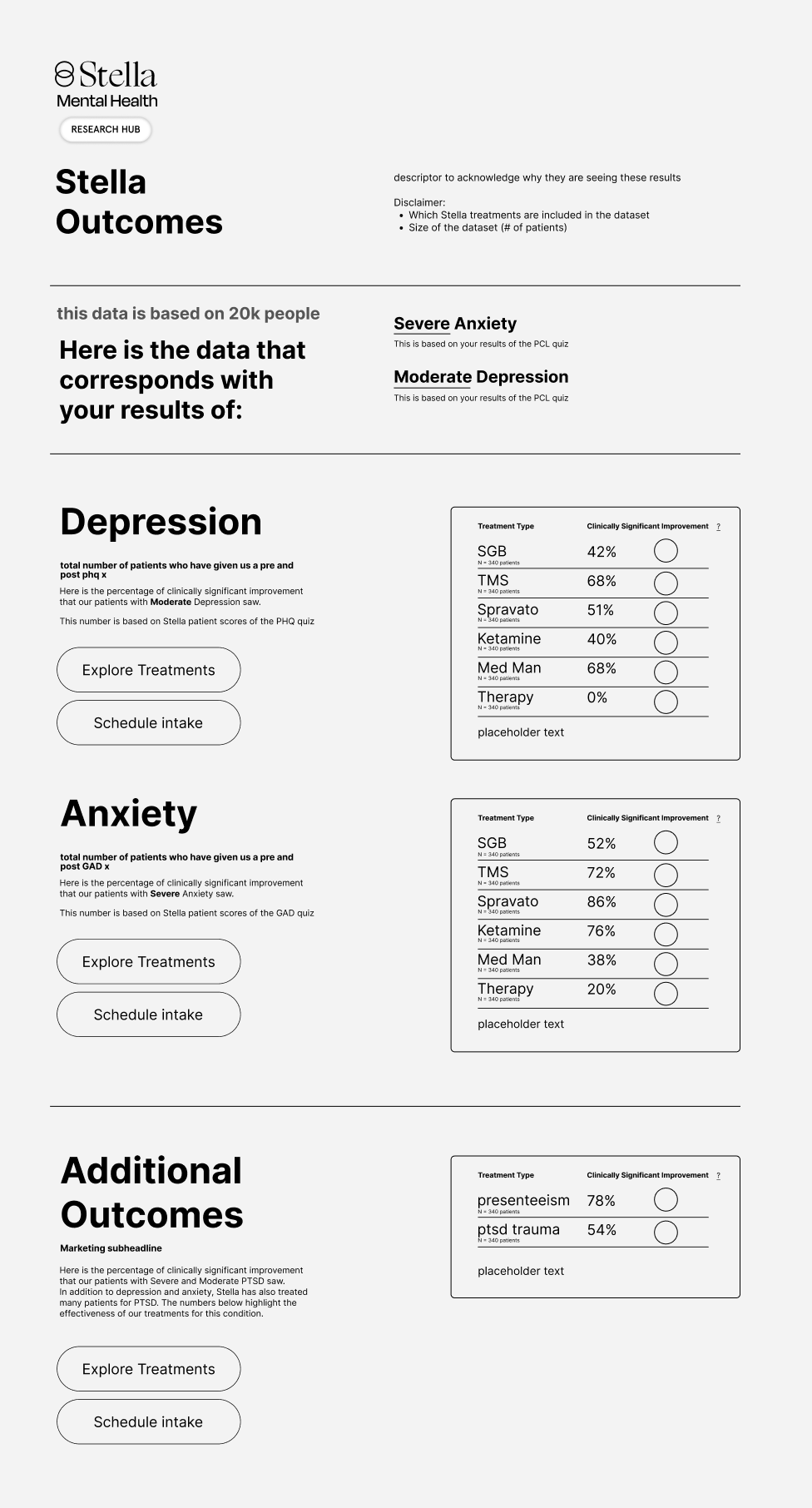
Wireframes:
I mapped out the user flow, making sure we had all the appropriate information or placeholders, and hierarchy for the final design.
Designs:
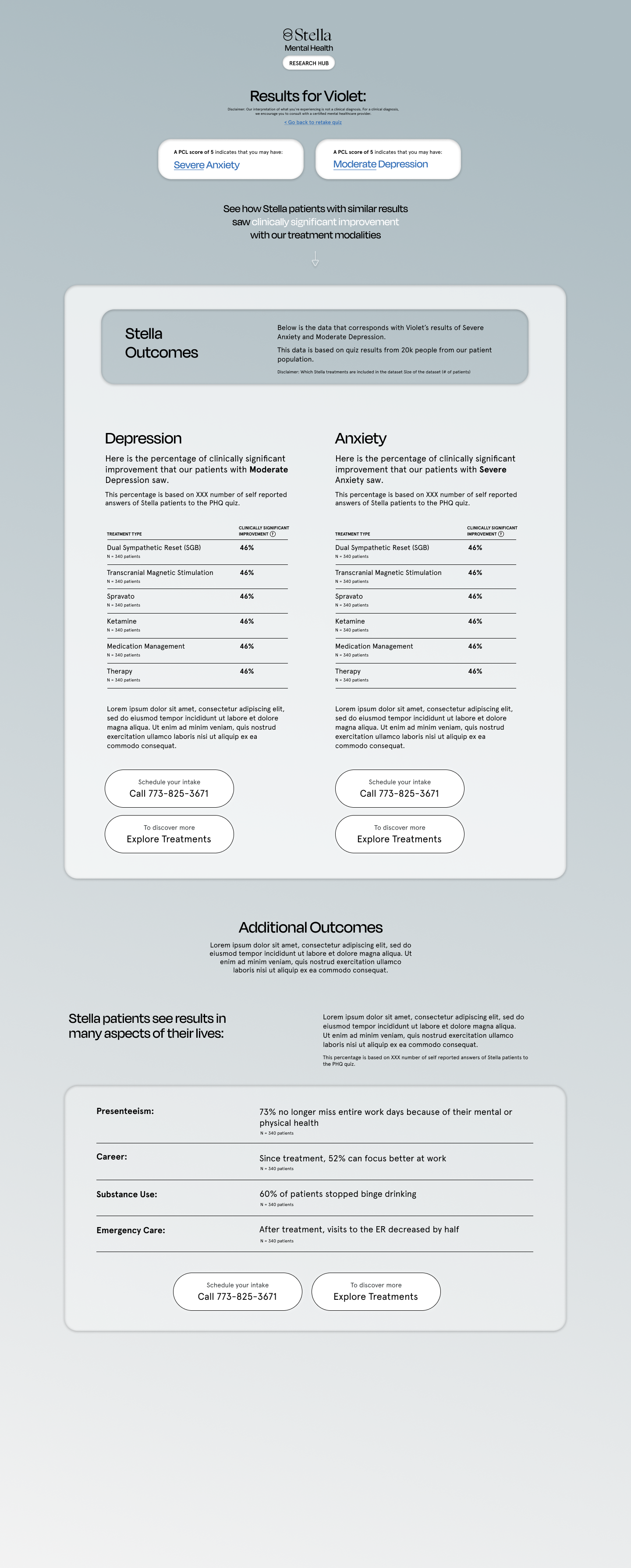
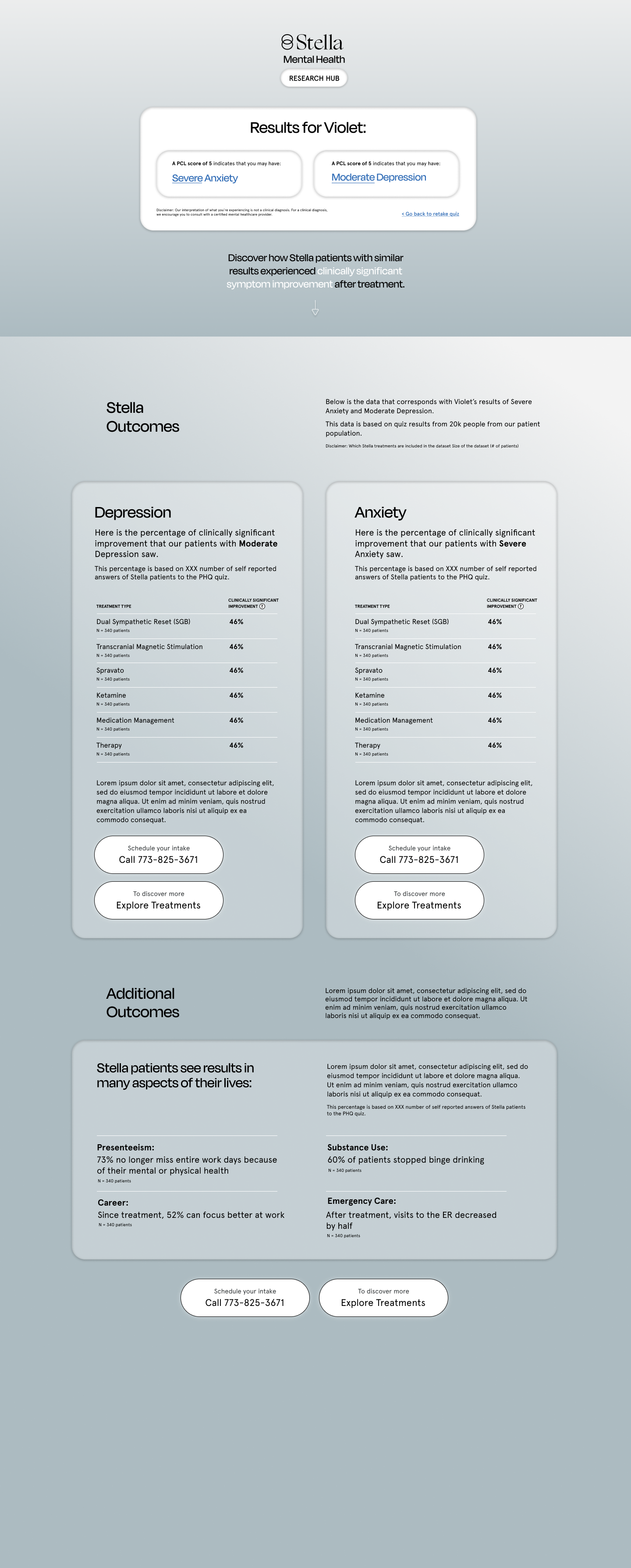
I proposed several designs and iterations of the Research Hub, collecting feedback from multiple departments.
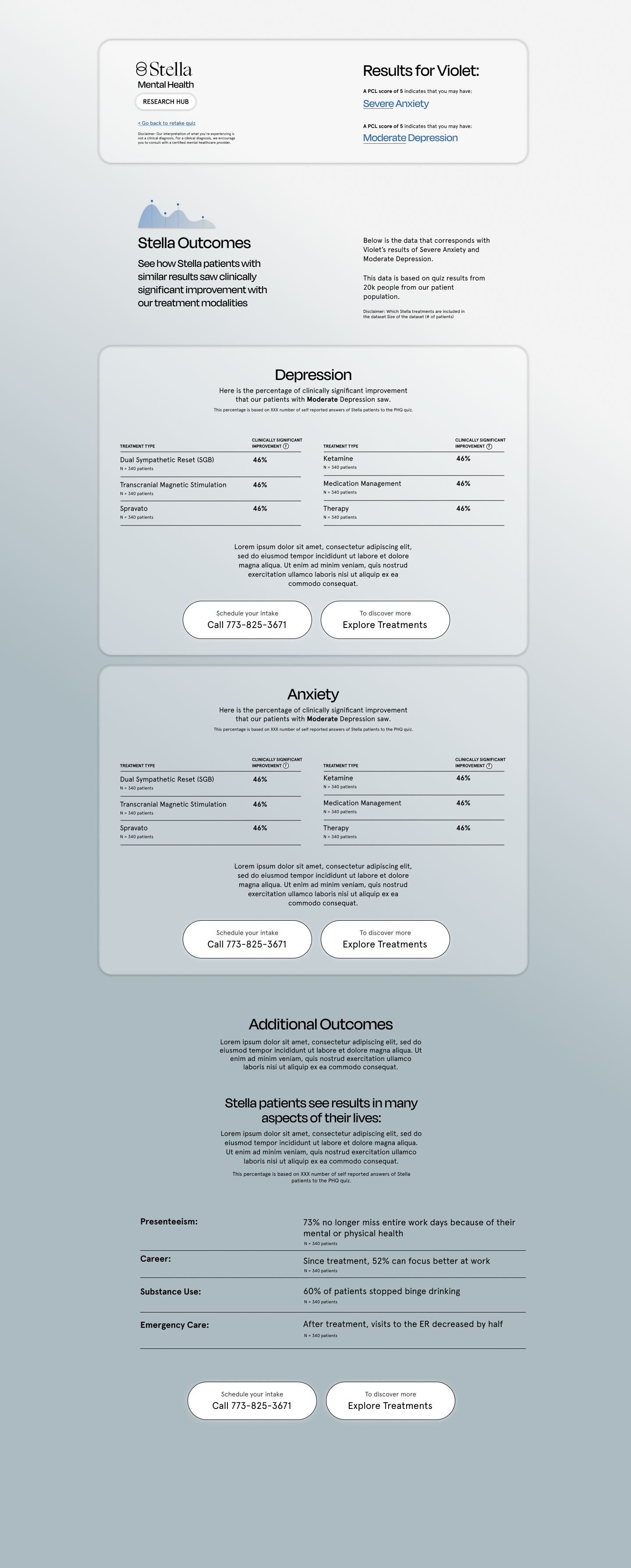
Final:
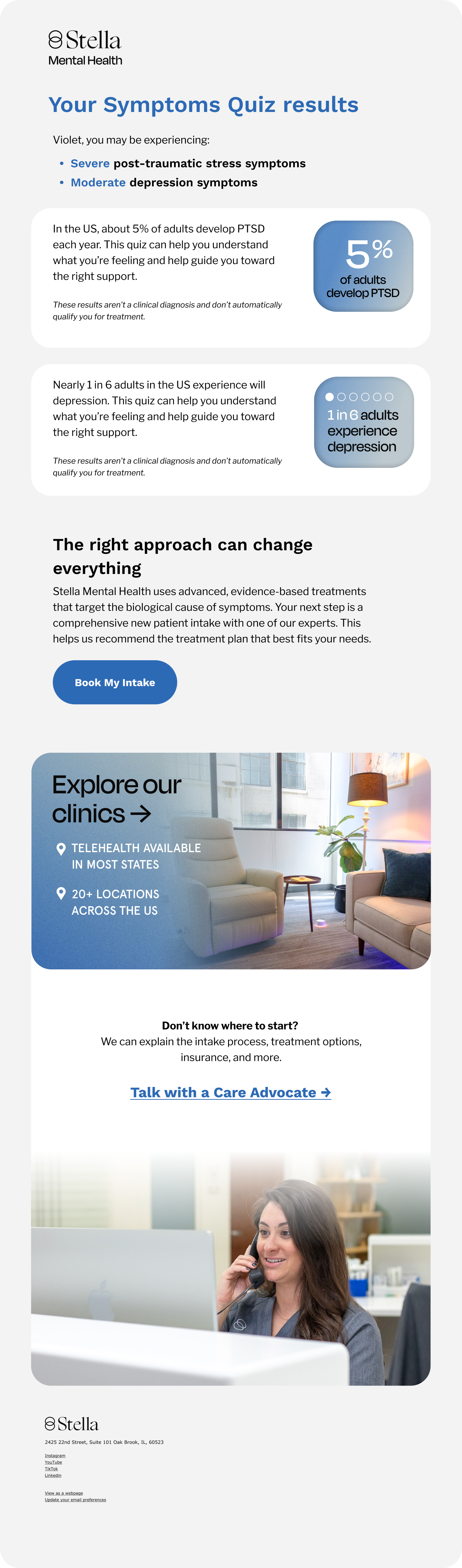
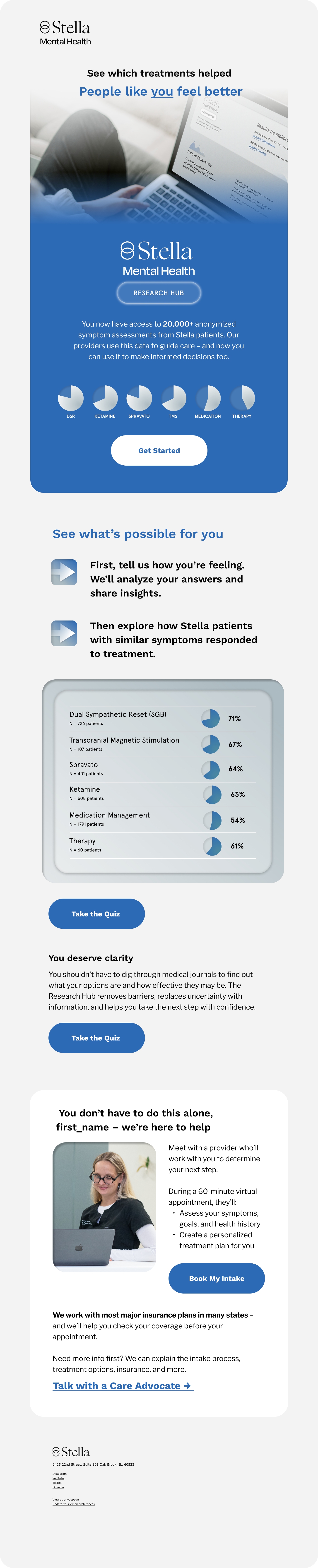
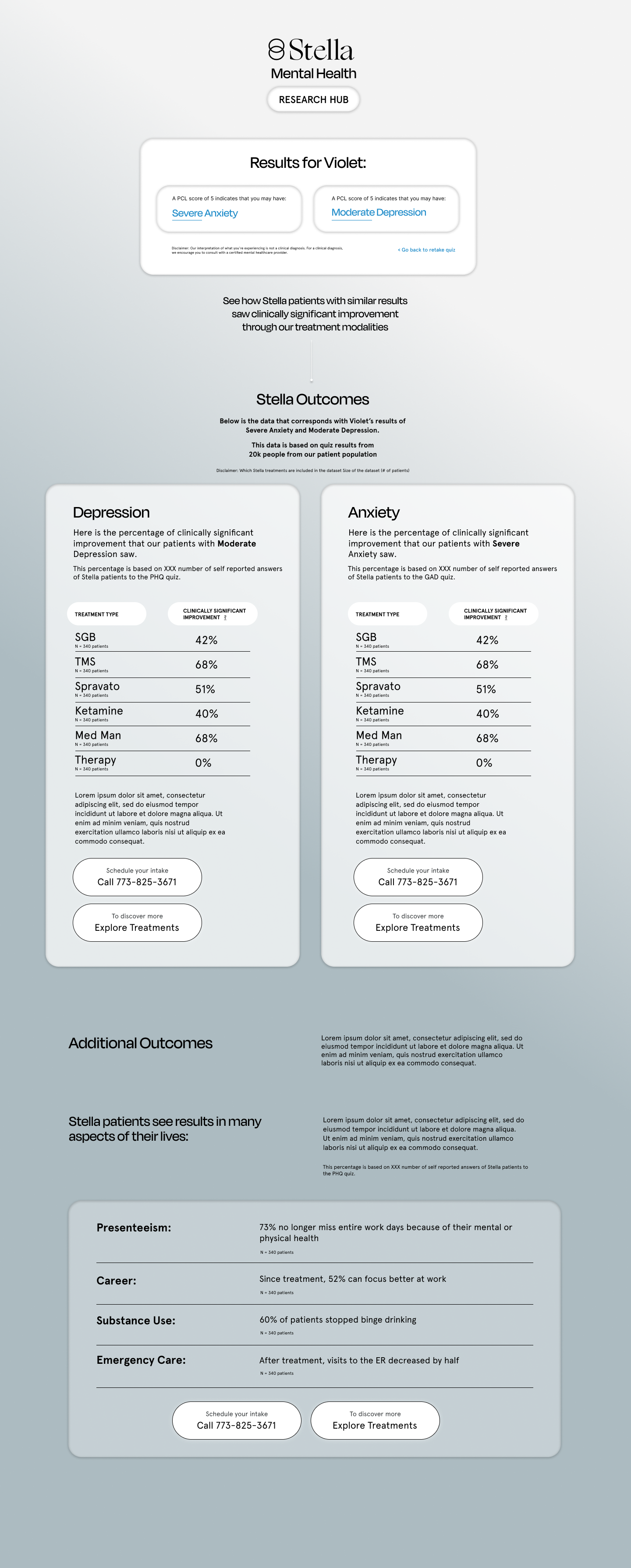
After the design direction was selected from the sketches, I moved on to the final design, creating screens to pass on to the developer. After several rounds of feedback with the developer, the Hub went live on the Stella site, where you can currently take the quiz and see your personalized results. Patients also get an email with their personalized results. Every touchpoint driving to connect with a real person at Stella Mental Health that will guide you through the next steps.
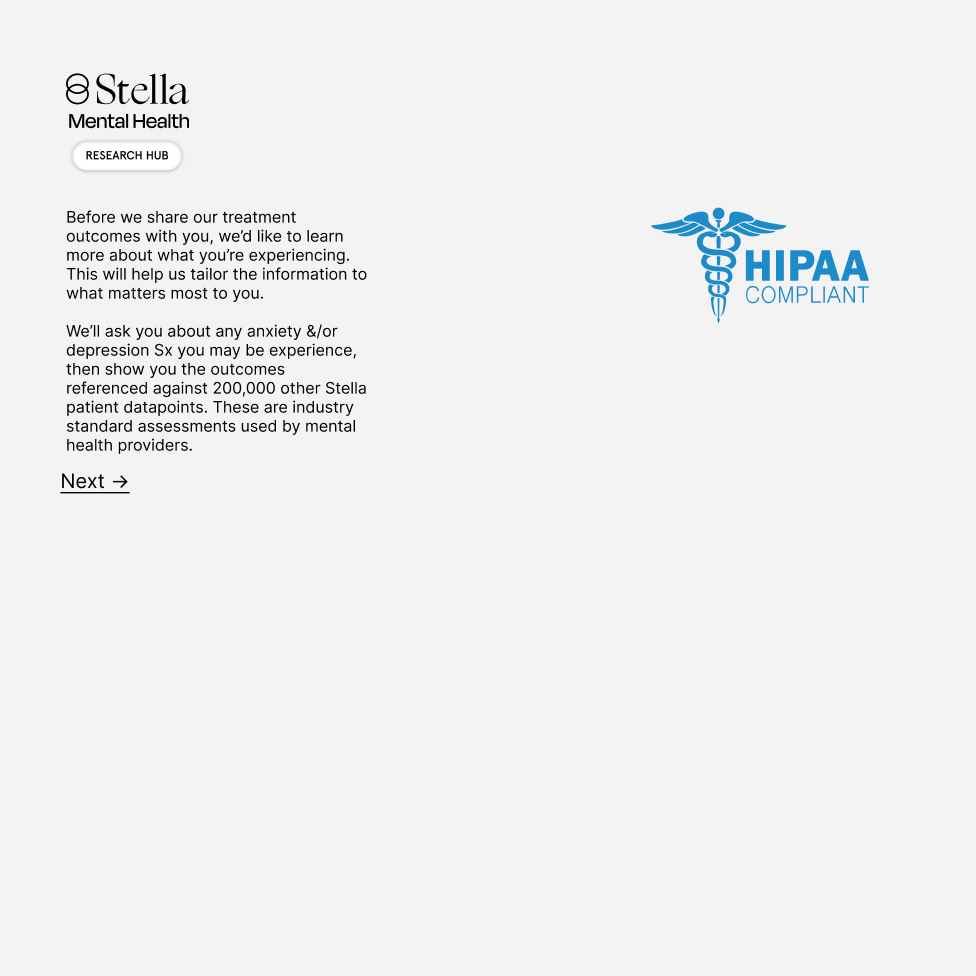
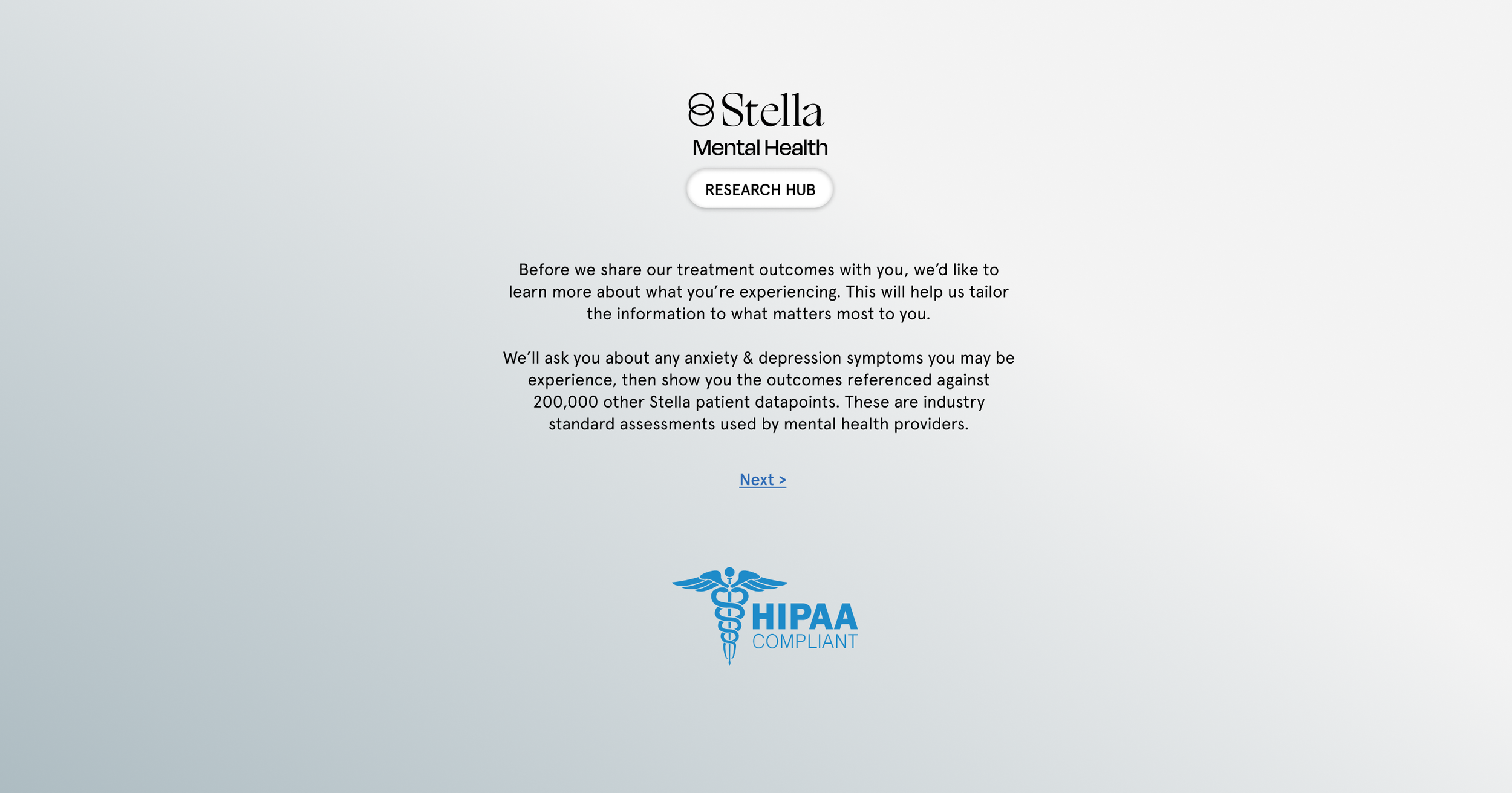
Step 1: Contextualizing the quiz
Transparency is the number one goal with this patient population, especially when the next screen asks sensitive questions. Reassuring the patient and centering the HIPAA compliant logo is the goal with this screen.
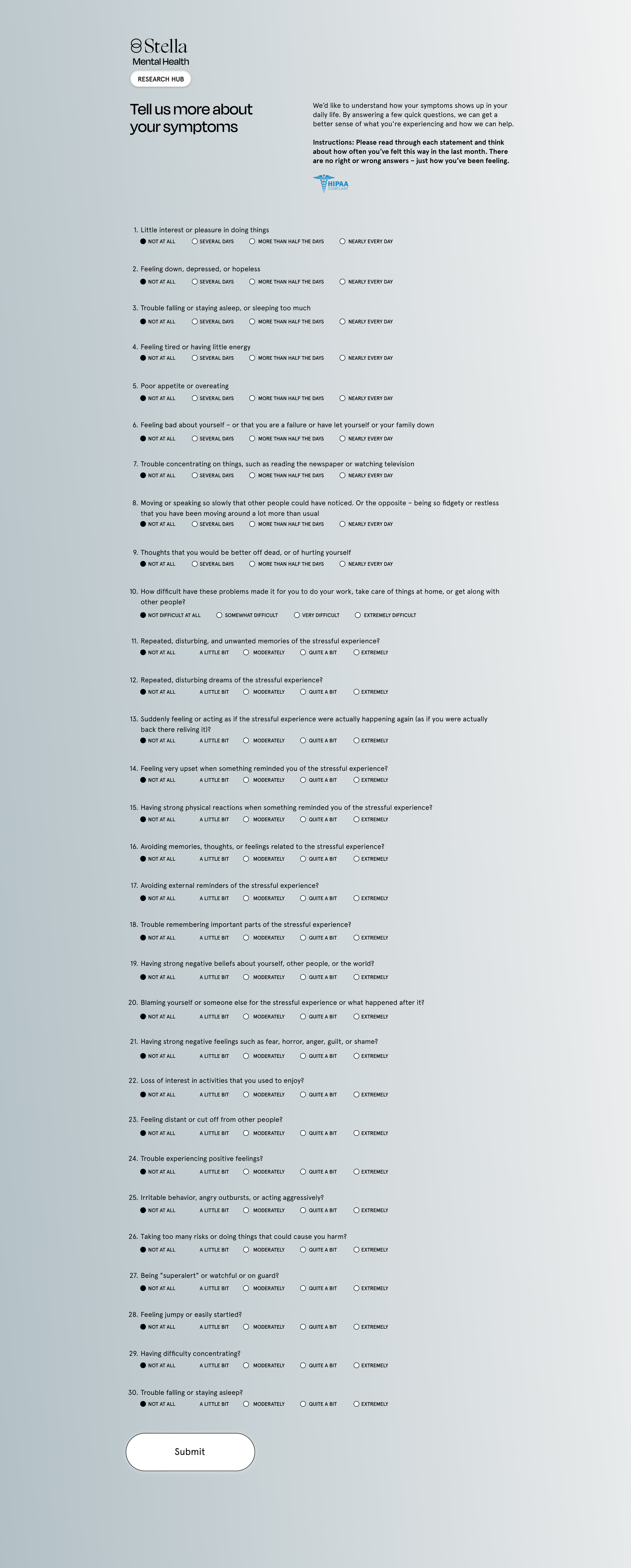
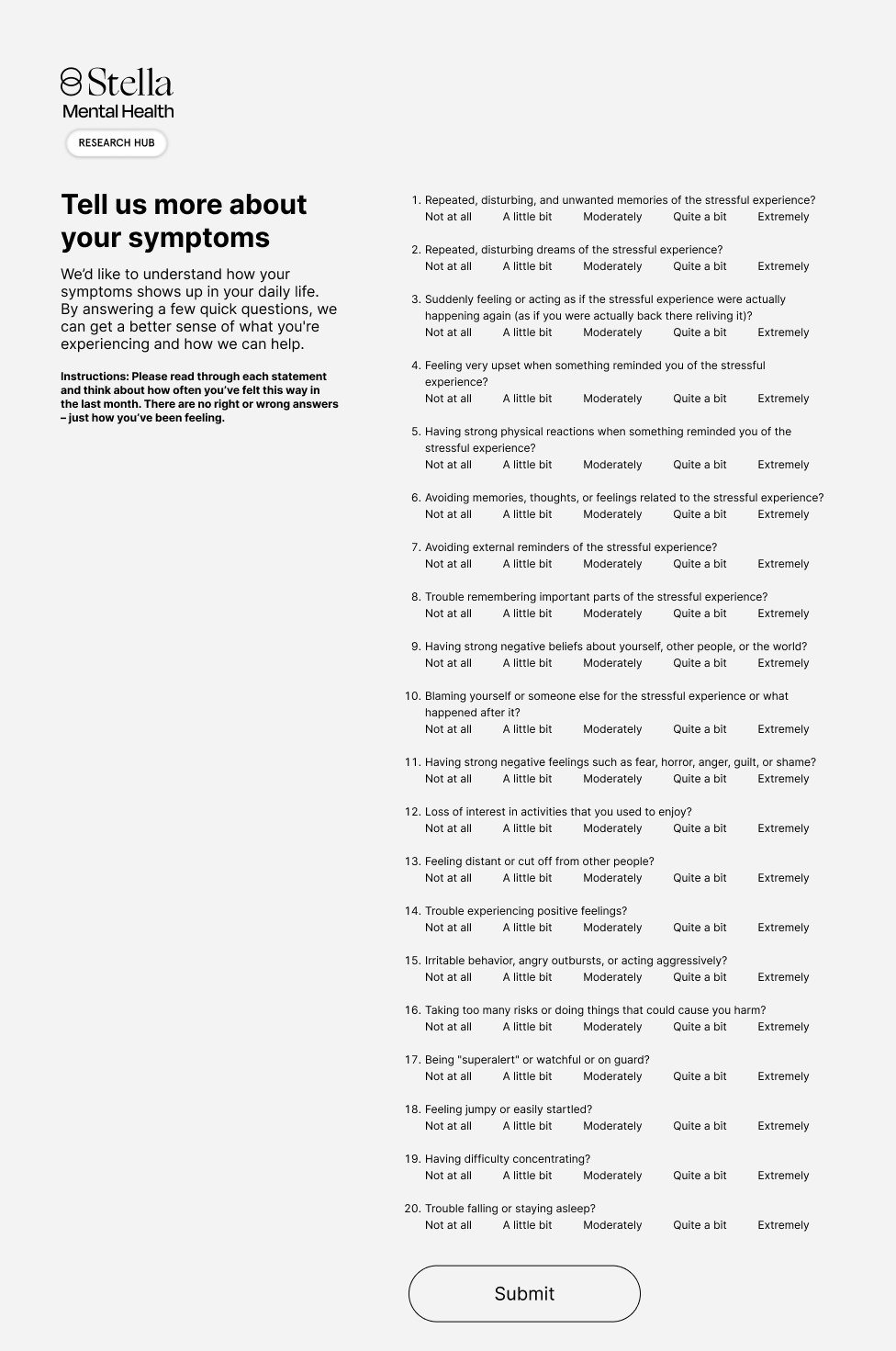
Step 2: the quiz
This screen asks extremely sensitive information, so starting with an approachable headline and repeating the HIPAA logo is important. We then ask the patient questions from the PHQ and GAD questionnaires, industry standards for measuring PTSD and Anxiety.
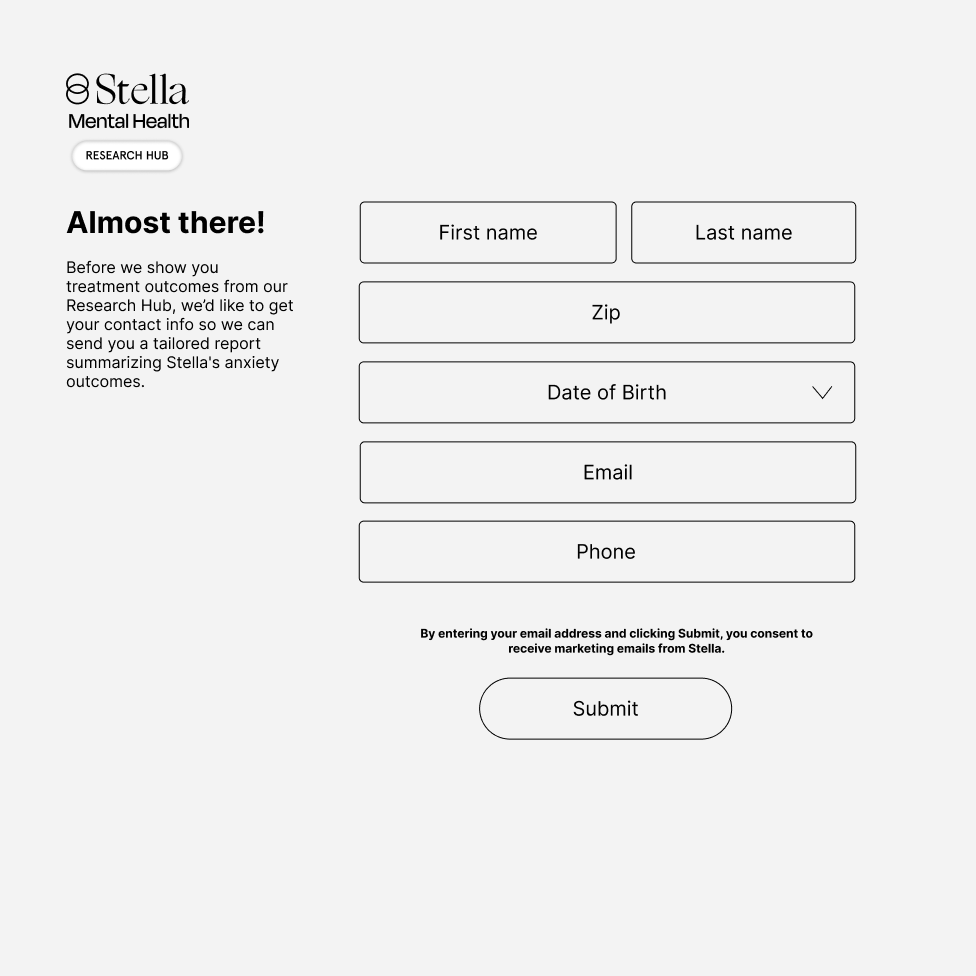
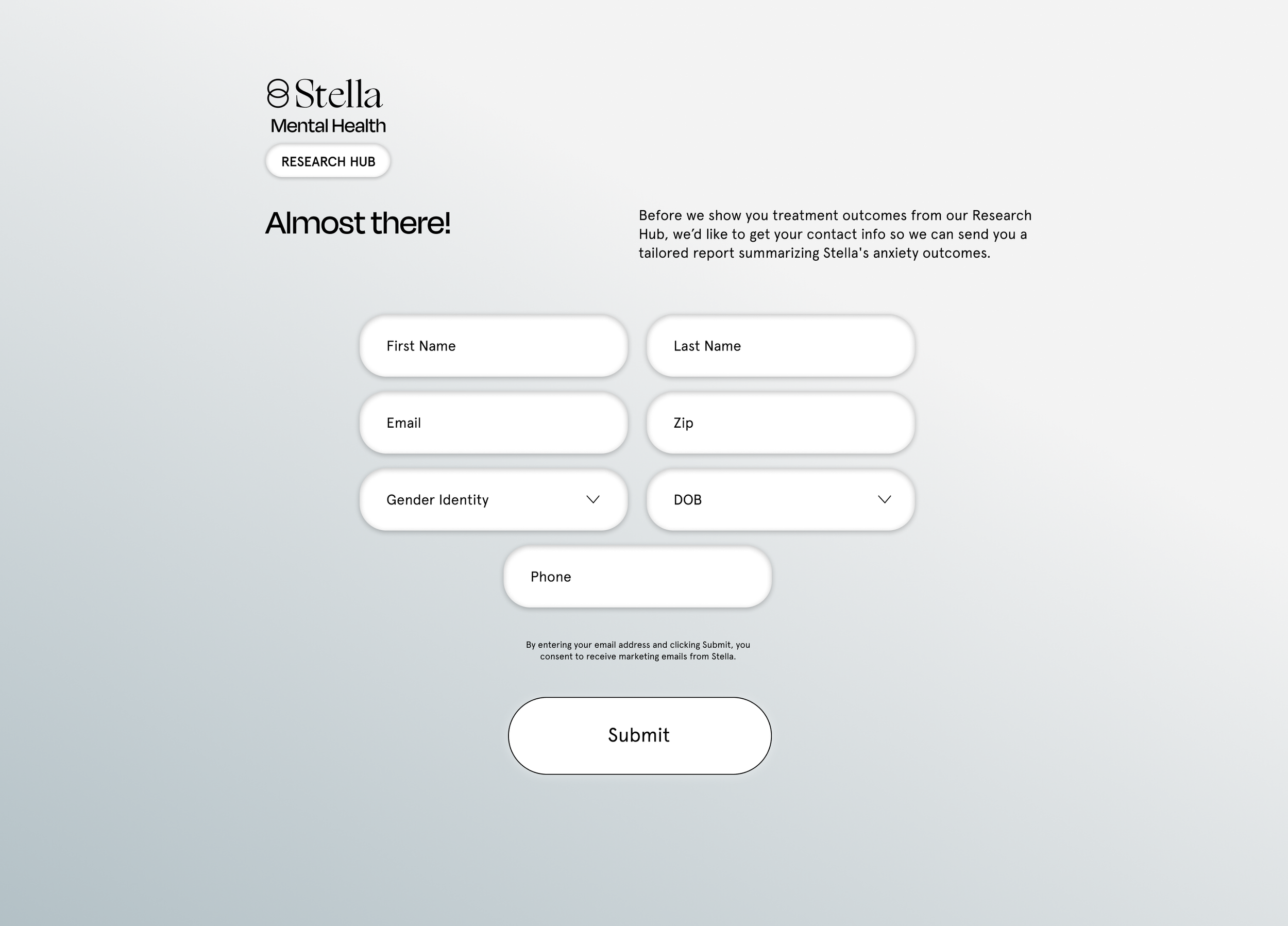
Step 3: Collecting information
To create as little friction as possible, we only added one additional screen between the quiz and the results to collect patient information. It was important here to contextualize why we collect this information - for the patient, and as a company - to know who is accessing our results.
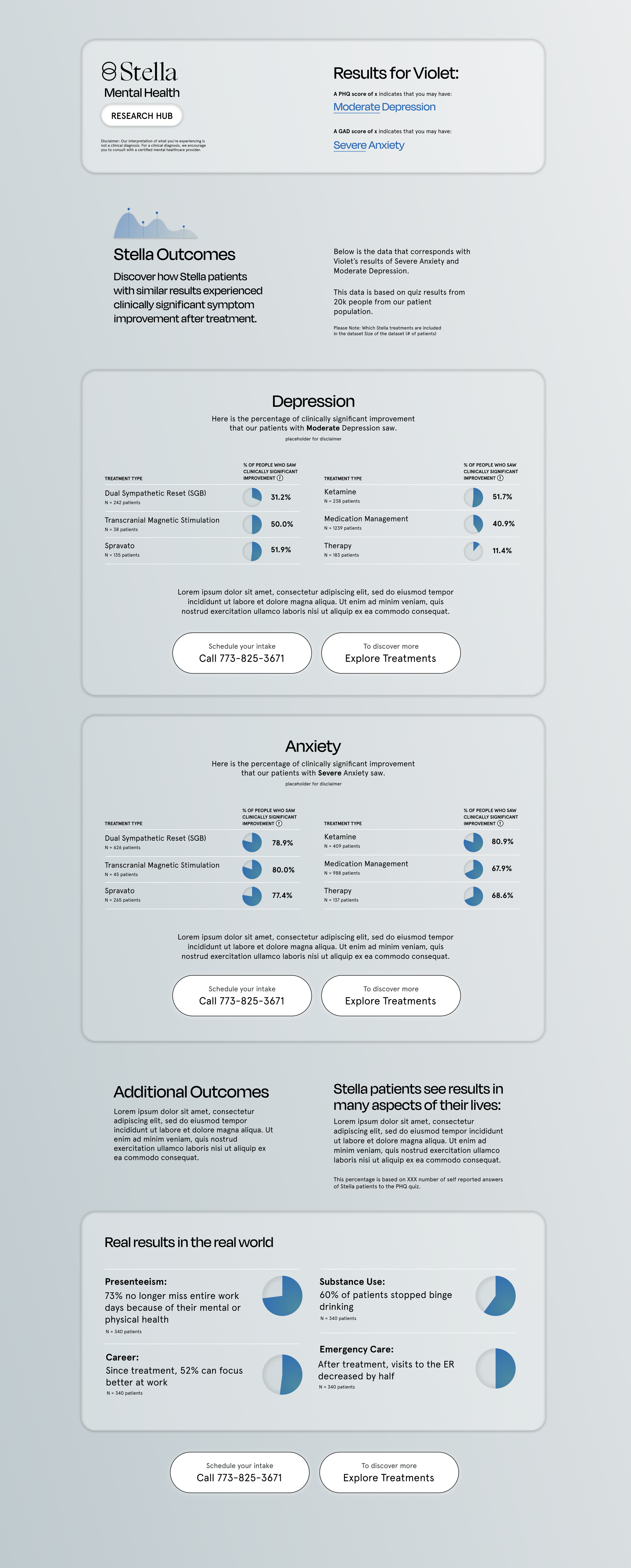
Step 4: Personalized Results
The final design is a combination of personalization and clean, modern design - all in the aim to convey trustworthiness and transparency. Since this data is protected at the individual result level, the text here is placeholder. Patients not only get to see their results at the top, but can compare it to real patient data from people treated by Stella, and how successful their treatments ultimately were. Containers and charts help to break up the feeling of a wall of text and numbers. Giving the hub it’s own logo, icon, and highlighting approachable headlines throughout, guide the user through the information, offering multiple opportunities to contact Stella for assistance or questions.
Marketing Support:
I also created graphics and emails to promote the quiz and encourage patients to see their personalized results. Also below is a sample of the personalized results a user would get emailed after completing the quiz and entering their email.